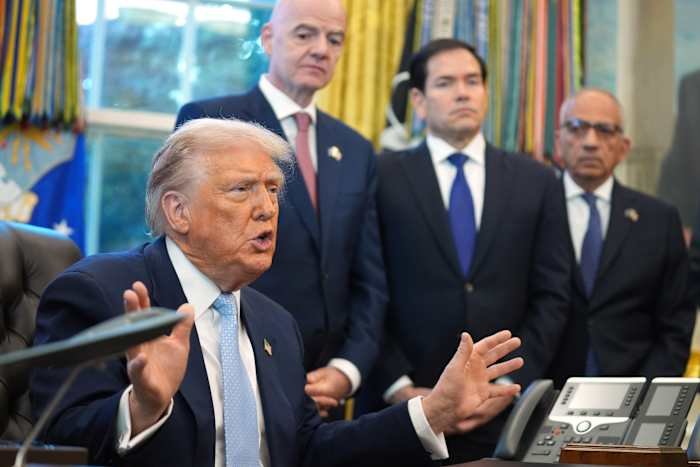
Orlando, FL – As President Donald Trump prepares to take center stage at the World Cup draw, his administration’s tough immigration message is intersecting with his efforts to roll out the welcome mat for teams and fans from around the globe. This collision of narratives has sparked national conversation—and, here in Orlando, a city celebrated for its diversity and international visitors, the implications are particularly resonant.
International Events Meet National Policy
The FIFA World Cup is more than a sporting event; it’s a global celebration that unites fans, players, and cultures from every corner of the world. With the United States co-hosting the 2026 World Cup alongside Mexico and Canada, the spotlight has turned to how the country will welcome hundreds of thousands of international visitors. President Trump’s participation in the World Cup draw signals a commitment to hospitality, but it also comes amid ongoing debates around U.S. immigration policy.
For cities like Orlando, which has a robust tourism industry and is home to a vibrant international community, the dual messaging is significant. Local businesses, hospitality workers, and cultural organizations are watching closely, aware that the city’s reputation as a welcoming destination is at stake.
Orlando’s Role as a Tourism and Soccer Hub
Orlando is no stranger to hosting major sporting events and welcoming visitors from all over the world. The city’s soccer scene has grown in recent years, with Orlando City SC and Orlando Pride drawing fans from across Florida and beyond. With the World Cup on the horizon, local officials and business leaders are eager to showcase Orlando as a potential host city for matches, training camps, or team bases.
However, the current national discourse around immigration has created uncertainty. Some worry that stricter travel and visa policies could deter international visitors, not only for the World Cup but for Orlando’s year-round tourism economy. Others believe that a strong stance on security is necessary to ensure the safety of all guests. These debates are playing out in city hall meetings, tourism boards, and neighborhood gatherings across Central Florida.
Community Impact: Residents, Workers, and Business Owners
Orlando’s diverse population includes immigrants from Latin America, the Caribbean, Europe, and Asia. Many residents are directly affected by federal immigration policies, whether through travel restrictions, visa approvals, or family reunification processes. The potential influx of World Cup fans and teams could bring new opportunities for local businesses, especially those in hospitality, food service, and transportation.
Yet, there are concerns about whether all visitors will feel truly welcome. Local advocacy groups have raised questions about the message being sent when the federal government promotes hospitality on the world stage while enforcing strict immigration measures at home. These groups are calling for Orlando to reaffirm its commitment to diversity and inclusion, regardless of federal policy shifts.
Preparing for the World Cup: Opportunities and Challenges
As the World Cup approaches, Orlando is ramping up efforts to position itself as a global city ready to host international visitors. City leaders are working with tourism officials to ensure the infrastructure, security, and hospitality sectors are prepared for an influx of guests. This includes addressing potential challenges related to visas, language barriers, and cultural sensitivity.
At the same time, Orlando’s leaders are advocating for clear guidance from the federal government to avoid confusion and mixed messages. They hope that, regardless of the national immigration debate, the city can present a unified front that combines safety with genuine hospitality. For many, the World Cup represents a chance to strengthen Orlando’s global reputation—and to demonstrate that the city can embrace the world, even in complex political times.
Conclusion: Orlando’s Global Moment in the Spotlight
As President Trump’s immigration stance collides with his World Cup welcome, Orlando stands at the crossroads of national policy and international opportunity. The decisions made now will shape not only the city’s role in the 2026 World Cup, but also its identity as a destination for people from all walks of life.
What do you think? How should Orlando balance its reputation for hospitality with national conversations on immigration? Share your thoughts in the comments below—we want to hear from you!